How to Plan Travel Vaccinations for a Long Trip


To plan travel vaccinations for a long trip, start three to six months before you leave. Give your pharmacist every country on your route, in the order you will visit them.
First, book multi-dose courses. Then, sort your malaria tablets, yellow fever proof, and records. A long trip isn't just two weeks in Spain. Missing a dose can leave you only half protected when you need it most.
The rest of this page walks you through each step, including costs, paperwork, and what to do if time is short.
Why Long Trips Need More Travel Vaccines

Risk rises with the time you spend in a country. A two-week stay at a resort hotel is a guided experience. You get meals from a managed kitchen, and most nights are spent inside.
A gap year looks different. You eat from street stalls, take night buses, and sleep in guesthouses. Add a month on a farm, or a trek through villages, and the picture changes again.
Close contact with local life is what pushes the risk up. Rural stays mean more contact with animals, untreated water and biting insects, which can increase exposure to infections such as rabies and hepatitis B compared with package holidays.
UK malaria guidance counts any trip over six months as long-term travel. That adds extra points to check, such as which tablets suit months of daily use.
Our travel vaccination consultation in Chatham covers all of this in one visit. The pharmacist checks your route, activities, medications, and past vaccines before giving any advice.
List Every Country on Your Trip
Tell the clinician every country, not only the main one. Include stopovers, side trips, and any land border crossings. A trip through South America can pass through four countries in a fortnight.
Order matters because yellow fever certificate rules depend on your route. Some countries ask for proof if you arrive from a country with yellow fever risk. A stop you barely noticed can leave you needing paperwork you did not expect.
Do not wait for a final plan. A rough route works, and the advice can be updated as your dates move. Bring your best guess, plus any countries you might add.
Mention what you will be doing as well. Volunteering at an animal shelter, diving, trekking, or working in healthcare each changes the advice. So does staying with relatives, since you will eat and drink as the household does.
When to Start Booking Travel Vaccinations for a Long Trip
NHS advice is to ask about travel vaccines at least six to eight weeks before you go. A long trip needs more lead time. Several courses need more than one visit, and some need weeks between doses.
Work backwards from your departure date. This table shows what usually happens at each stage.
When | What to do | |
Three to six months before | Write down your countries, dates and planned activities. Book a travel consultation. Gather any vaccine records, and ask your GP surgery for a printed summary if you cannot find them. Start slow multi-dose courses, such as hepatitis B or rabies, so the gaps fit before you leave. | |
Six to eight weeks before | Have your main consultation if you have not yet. Get second doses and any vaccines that need time to work. Book yellow fever if your route needs it, as it must be given at least ten days before you arrive. Buy your malaria tablets in the UK. | |
Two to four weeks before | Finish any doses planned before you leave. Ask when to start malaria tablets, because the start date depends on the tablet. Check your vaccine record is complete and the dates are written down. | |
The final week | Pack tablets, repellent, your vaccine record, and printed copies. Tell the clinic about any route changes. Confirm which doses or boosters fall due while you are away. | |
During the trip | Take tablets exactly as directed, and keep going for the set time after you leave a malaria area. Put booster dates in your phone calendar. Get medical care quickly for a fever or any animal bite. |
Treat this table as a guide. Your own timeline depends on your route, your age, your health, and the vaccines you need.
Travel Vaccines That Need Several Doses

A multi-dose course builds protection in steps. The first dose primes your immune system. Later doses, given at set gaps, bring the protection up to full strength.
Vaccines often given as a course for long trips include hepatitis B, rabies, Japanese encephalitis, and tick-borne encephalitis. Combined hepatitis A and B is another, and oral cholera vaccine is a short course.
Standard courses can stretch over several weeks, and sometimes up to six months. That is why they set your timeline. Count from the first jab to the last, then work back from your departure date.
The gaps come from UK guidance such as the Green Book and TravelHealthPro. Do not copy a schedule from a forum or a friend. The brand and your age can change it.
Rabies is a good example of why this matters. It spreads through bites from infected animals, and it is almost always fatal once symptoms start. Vaccination before you go gives you more time to reach help, but it does not replace medical care after a bite.
What If You Run Short of Time?
Late bookers are not turned away. There is usually something useful that can be done, even a few weeks before departure. The choice rests with your clinician, because it depends on your route and health.
One dose of a multi-dose vaccine may give some protection, though not the full effect. Do not assume you are covered after a single jab. Ask the pharmacist what you are protected against at each stage.
Faster schedules exist for some vaccines, such as hepatitis B and rabies. Your clinician decides if one suits you. Yellow fever is different, because protection and the certificate only start ten days after the dose.
You may also finish a course later, either at a clinic abroad or after you return. Keep a record of each dose and the brand. Check that the clinic has the same vaccine before you rely on it.
Some travellers cover the highest-risk diseases first and finish the rest later. Others move their departure date by a few weeks. Extra care with bites, food and water helps while protection builds.
Malaria Tablets for a Long Trip
UKHSA uses the ABCD approach, and each letter does a job. Be aware of your risk, which varies by region and season. Prevent bites. Take malaria tablets where advised. Diagnose and treat any fever promptly.
Malaria symptoms can appear between 7 days and 12 months after exposure. In addition to high fever and chills, look out for tiredness, headache, muscle aches, cough, and diarrhoea.
For bite prevention, use 50% DEET or 20% picaridin on exposed skin. Apply it after sunscreen, not before. Sleep under a treated net where mosquitoes bite at night. The UKHSA malaria guidelines are updated every year.
Then take the tablets. In 2023, 89% of UK malaria cases with a known history had not taken any, TravelHealthPro reports. Over months, it is easy to slip, so link the tablet to a daily habit like breakfast.
Tablet choice depends on your route, local resistance, health and other medicines. Some tablets interact with common prescriptions. A few are unsuitable if you have a history of certain mental health conditions or seizures. The pharmacist checks all of this first.
Buy tablets in the UK before you leave. UKHSA warns that tablets sold in tropical countries can be fake or poor quality. Duration limits vary by medication: mefloquine can be used for up to 12 months with periodic clinical monitoring, while doxycycline can be taken for up to 2 years of continuous use. Ask your pharmacist how many you need and how to restock on a long trip.
Bed net treatment wears off over time, so treat or replace nets as advised. No tablet is 100% effective. See a doctor fast for any fever, even after you are home, and tell them where you have been.
How Much Do Travel Vaccines Cost?
A multi-country trip can need several courses, so the cost adds up. A route through Southeast Asia and South America might need rabies, hepatitis B, Japanese encephalitis and yellow fever. That is four charged vaccines before you buy any tablets.
Some are free. At a GP surgery, after a risk assessment, the NHS covers hepatitis A, typhoid, cholera and the combined tetanus, diphtheria and polio booster. Not every surgery has space, and waiting lists can be long.
You usually pay for hepatitis B, Japanese encephalitis, rabies, tick-borne encephalitis and meningitis ACWY. Yellow fever is also a paid vaccine, and only registered centres can give it. Our Chatham clinic is one.
On our current list, most travel vaccines start from £50. Yellow fever is £75, rabies £85, and Japanese encephalitis £110. Ask for the full course cost, since some of these need more than one dose.
Prices change, so confirm the current cost when you book.
Vaccine Records and Boosters Abroad
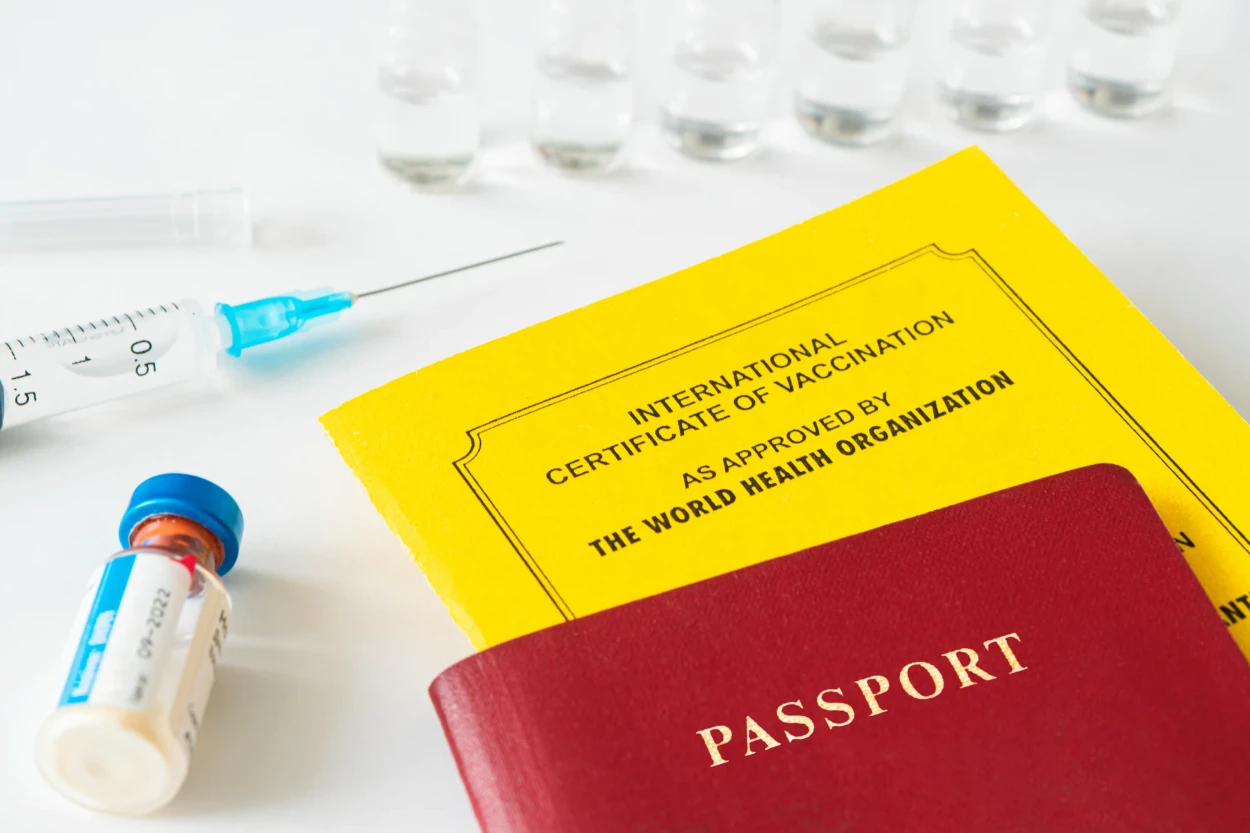
You leave the clinic with a written record of what you had and the dates of any follow-up doses. Keep it safe. Future clinics will ask for it, and you may need it years later.
Take a photo of every page and store a copy in your email or cloud too. Phones get lost, and paper gets wet. A digital copy saves you chasing records from another country.
Carry your yellow fever certificate in hand luggage. The NHS says it becomes valid ten days after the jab and now lasts for life. If you lose it, contact the centre that issued it, as registered centres keep records.
Check whether any dose or booster falls due while you are away. Put the date in your phone calendar and ask where you could have it done abroad. Some travellers plan a short trip home instead.
Arrange a follow-up for when you return. It lets you finish any course and update your records. Private clinics do not update your GP record automatically, so ask for a vaccination summary and pass it to your surgery.
Travel Insurance and Medical Care Abroad
Standard travel insurance often limits each trip to a few weeks. For a long trip, you need a long-stay or backpacker policy. Check the maximum trip length before you buy, and check that it covers your activities, such as trekking or diving.
Declare all existing health conditions, or a claim could be refused. Look for medical repatriation cover, which pays to fly you home if you are seriously ill or injured. That bill can run to many thousands of pounds.
A GHIC is not a substitute for insurance. It is free and lasts up to five years, but it covers only state healthcare in the EU and a few other countries. It does not cover repatriation or private care.
Note the nearest clinic or hospital at each main stop, plus your embassy number. Save them offline, so you can reach them without a signal.
Book Your Travel Vaccination Appointment

Chatham Pharmacy & Travel Clinic at 139 New Road, ME4 4PT, serves Chatham and the wider Medway area. Opening hours are Monday to Friday from 9.00 am to 5.30 pm and Saturday from 9.00 am to 2.00 pm (closed Sundays and bank holidays). Book early for a long trip, because multi-dose courses need time. Book online or call 01634 404142.
Frequently Asked Questions
Conclusion
A long trip asks more of your health plan than a short holiday. The longer you stay, the more your route, activities, and medical history shape what you need.
Start early, because courses take weeks or months. Share every country with your pharmacist, and expect multi-dose vaccines such as rabies or hepatitis B to set the pace.
Take malaria tablets seriously and buy them before you leave. Carry your records, including any yellow fever certificate, and check that your insurance covers a stay this long.
Ready to book an appointment?
Same-week availability for most services. Book online or call us.