A travel clinic consultation is a private appointment, usually 20 to 30 minutes, where a pharmacist goes through your trip and your health history before recommending any vaccines.
You talk through where you are going, what you will be doing there, what jabs you have already had, and what medicines you take. Most people then have their vaccines in the same visit.
That is the short version. The rest of this page walks you through each stage, including what to bring, the questions you will be asked, and why some travellers leave with a different plan to the one they expected.
What Is a Travel Clinic Consultation?

It is a risk assessment first and a vaccination appointment second. The clinical work happens in the conversation, not the injection.
Two people flying to the same country can need completely different protection. A fortnight in a Bangkok hotel is not the same trip as six weeks volunteering in rural Isaan, and the vaccine list reflects that.
At Chatham Pharmacy and Travel Clinic on New Road, the pharmacist works through your itinerary against the current country guidance from TravelHealthPro, the National Travel Health Network and Centre site the NHS uses. That guidance changes often, so a plan that was right two years ago may not be right now.
The consultation also covers things that are not vaccines at all. Malaria tablets, bite prevention, food and water advice, altitude, rabies risk, and what to do if you get ill abroad.
Pre-Consultation Preparation (What to Bring)
The appointment is only as good as the information you bring to it. Missing records are the single biggest reason people end up repeating vaccines they did not need.
Bring these if you have them:
Your full itinerary with dates, including stopovers and any side trips
Any vaccine records you hold, including a red book, an old yellow fever certificate, or a printout from your GP
A list of your current medicines, including anything bought over the counter
Details of ongoing conditions, recent surgery, or treatment that affects your immune system
Your passport if you need a yellow fever certificate, so the details match exactly
If you cannot find your vaccine history, ring your GP surgery and ask for a printed vaccination summary. Most practices will do this within a few days.
Worth knowing before you come: book early. Six to eight weeks ahead is sensible, because several courses need more than one appointment and some need a gap of weeks between doses.
Last minute travellers are not turned away. There is usually still something useful that can be done, even a few days before departure.
What Happens During the Health Assessment?

The pharmacist will take you into a private consultation room and work through three areas in order. Destination, then your health, then the vaccines themselves.
Nothing is given until the first two are done. That order matters, because the second stage sometimes rules out a vaccine the first stage suggested.
The Destination Risk Assessment
You will be asked where you are going, when, and for how long. Then the detail: rural or urban, hotel or homestay, dry season or wet, and what you will be doing day to day.
Trekking, diving, working with animals, visiting family, attending Hajj or Umrah. Each one changes the picture. Someone staying with relatives usually eats and drinks the same as the local household, which raises the risk of hepatitis A and typhoid compared with a package holiday.
Malaria is assessed separately from vaccines, because there is no vaccine for travellers. The pharmacist checks whether your specific regions carry risk, then advises on tablets and bite avoidance.
For bite prevention the standard advice is 50% DEET or 20% picaridin on exposed skin, plus a treated net where mosquitoes bite at night. Repellent goes on after sunscreen, not before.
Medical History and Contraindication Review
This is the safety stage. You will be asked about allergies, previous reactions to vaccines, pregnancy or breastfeeding, a history of thymectomy or thymus disorders, and any condition or medicine that weakens your immune system.
Live vaccines require the most care. Under our Patient Group Direction (PGD), yellow fever is an absolute exclusion for individuals over 60, those who are immunocompromised, or anyone with a history of thymus disorders or thymectomy.
Your medicines get checked too. Some malaria tablets interact with common prescriptions, and a few are unsuitable if you have a history of certain mental health conditions or seizures.
Age matters for several vaccines. Children can have most travel vaccines, but the age thresholds and doses differ, and a few products are not licensed below a certain age.
If something rules out a vaccine, you will be told what the alternative is. That might be a different product, a different schedule, or advice on avoiding exposure instead.
Vaccine Administration and Certification

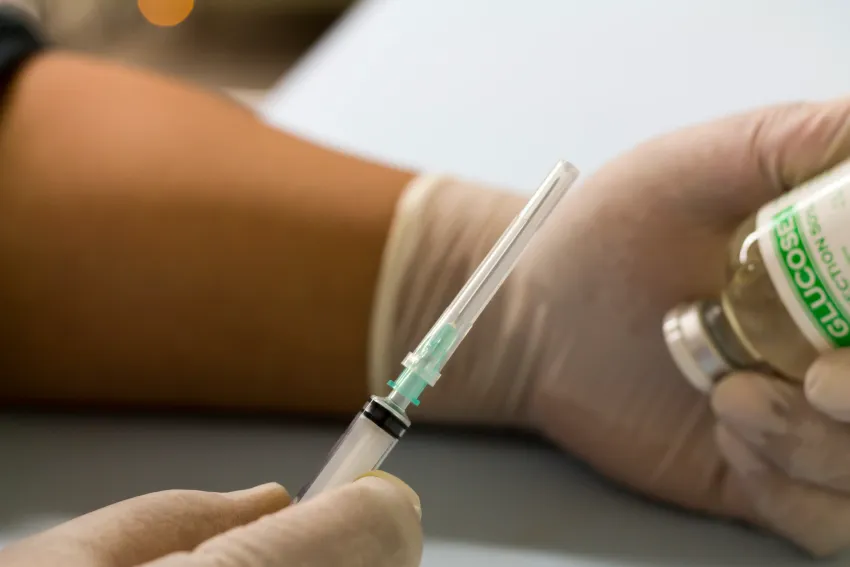
Vaccines are given into the upper arm, one at a time, and you will be asked to wait about 15 minutes afterwards. That wait is standard practice, and every clinic keeps adrenaline on hand with staff trained in anaphylaxis treatment. Note that certain multidose courses, like Japanese Encephalitis, require a 28-day gap between doses.
Sore arm for a day or two is normal. Mild fever, tiredness or a headache can happen, particularly after rabies or typhoid, and settles on its own.
You will leave with a written record of what you had and the dates of any follow up doses. Keep it, because future clinics will ask for it and you may need it years later.
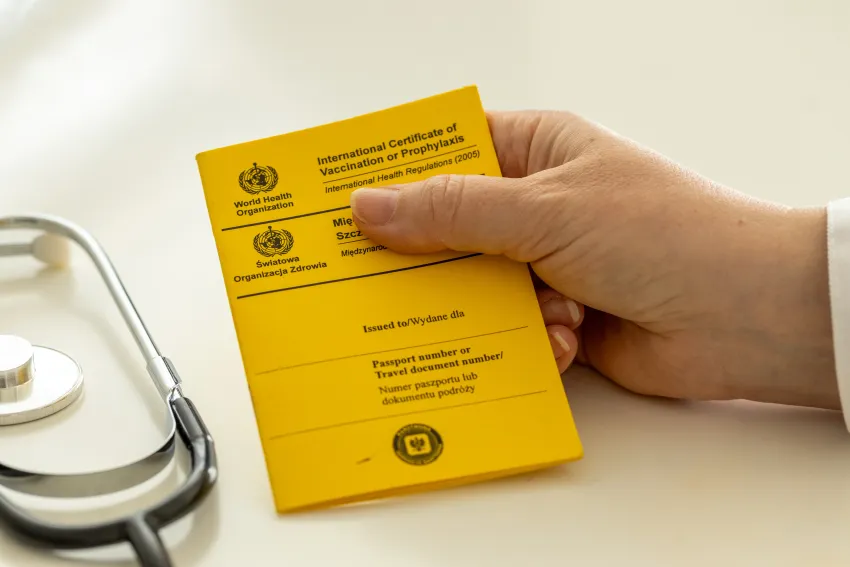
Yellow fever comes with an extra step. Chatham Pharmacy is a registered yellow fever centre, which means the clinic can issue the International Certificate of Vaccination or Prophylaxis, stamped and signed.
That certificate only becomes valid ten days after the injection, so a last minute yellow fever jab will not get you through a border check that requires one. For most people it then lasts for life.
Hajj and Umrah travellers have their own paperwork. Saudi entry rules require proof of meningitis ACWY vaccination given at least ten days before arrival for anyone aged 1 and above, and the certificate is valid for a maximum of five years.
How to Book Travel Vaccinations (NHS vs Private)
Some travel vaccines are free on the NHS at a GP surgery. Typically that covers the combined tetanus, diphtheria and polio booster, hepatitis A, typhoid and cholera.
Everything else is private. Yellow fever, rabies, Japanese encephalitis, tick borne encephalitis, meningitis ACWY, hepatitis B and chickenpox all carry a charge wherever you go.
The practical problem is capacity. Many GP surgeries have stopped running a travel service altogether, and those that still do often have a waiting list that does not fit a trip booked six weeks out.
A private travel clinic gets you seen faster and handles the certificate work in one visit. At Chatham the pharmacist has more than ten years of travel health experience, and most travel vaccines start from £50, with yellow fever at £75, tick borne encephalitis at £65, rabies at £85 and Japanese encephalitis at £110.
Booking is done online at chathampharmacy.co.uk/book-now. The clinic is at 139 New Road, Chatham ME4 4PT, open Monday to Friday, closed for lunch between 1pm and 2.15pm, and serves patients across Gillingham, Rochester, Rainham, Strood and the wider Medway area.
Prices and schedules change, so confirm the current cost when you book rather than relying on an old quote.
Frequently Asked Questions
Conclusion
A travel clinic consultation is mostly conversation. Your destination, your plans on the ground and your medical history decide the vaccine list, not the country name on your boarding pass.
Come with your dates, your itinerary and whatever vaccine records you can find. Book six to eight weeks ahead where you can, since courses like rabies and Japanese encephalitis need more than one visit.
NHS surgeries cover a handful of travel vaccines free but often cannot fit you in. A private clinic handles the assessment, the jabs and the certificates in a single appointment, which is usually what people are short of time for.

Ready to book an appointment?
Same-week availability for most services. Book online or call us.