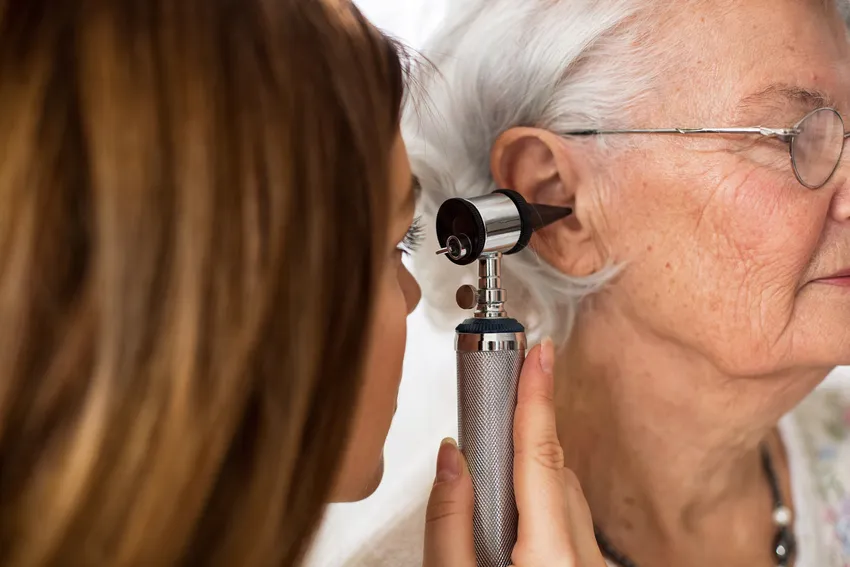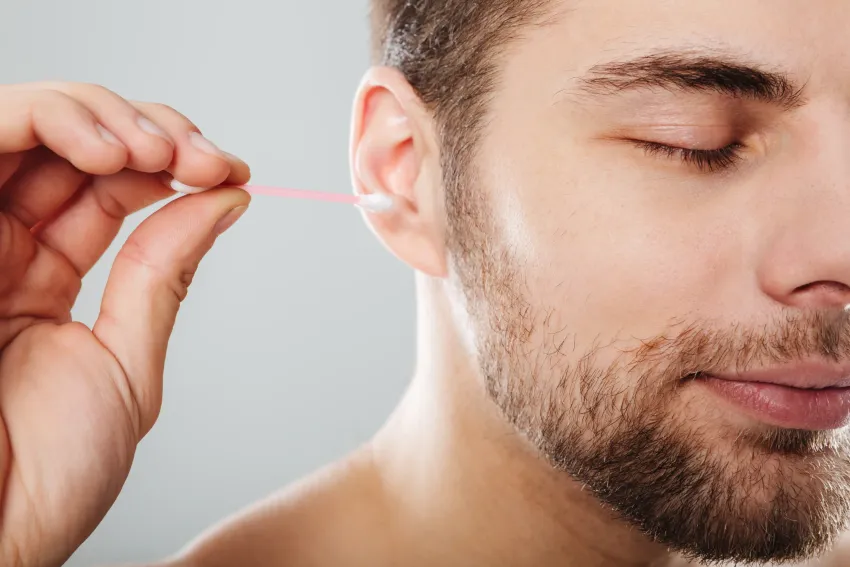
DIY ear wax removal can cause permanent hearing damage, a ruptured eardrum, or a serious ear infection. Most home methods, especially cotton buds and ear candles, push wax deeper rather than removing it. If your ears feel blocked or your hearing has dipped, professional microsuction is the safest fix.
Keep reading to understand exactly what can go wrong and when you need to act.
Ear Wax Explained: Why Your Ears Usually Clean Themselves
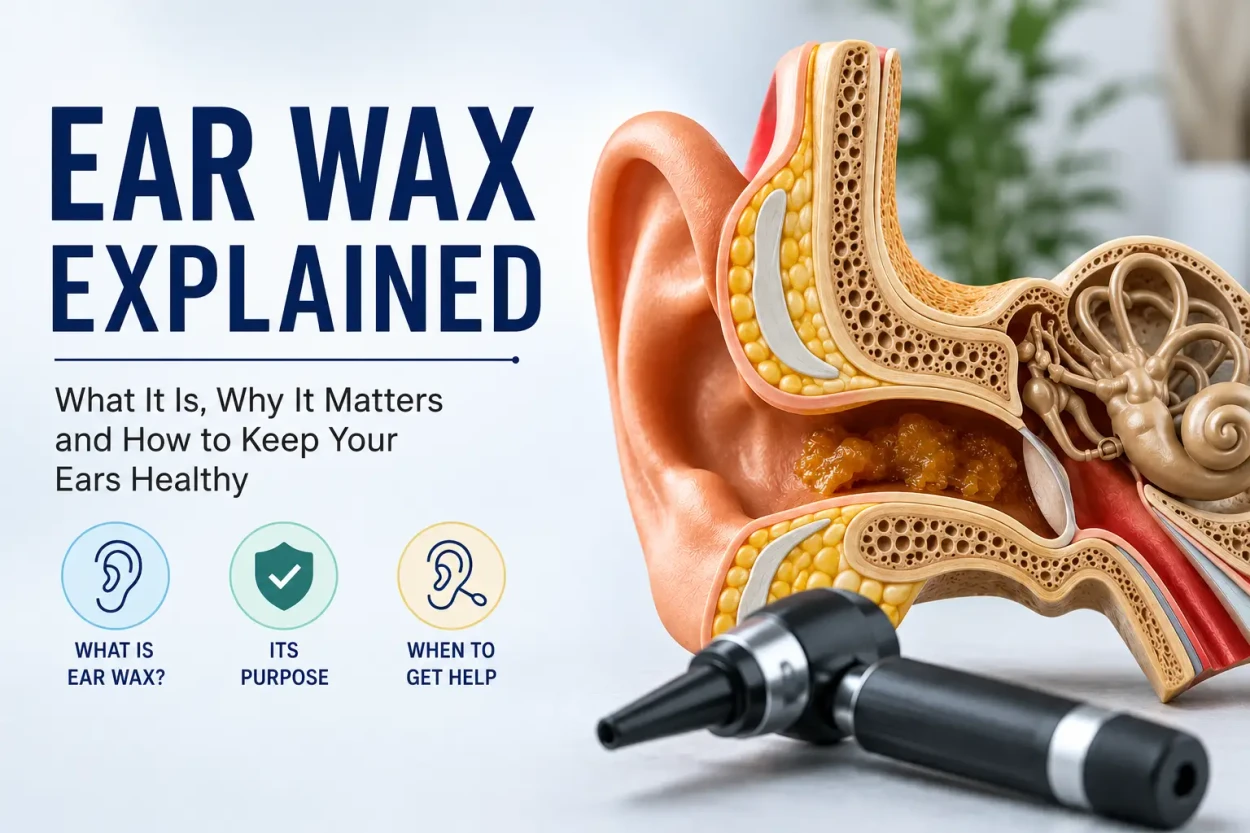
Ear wax, or cerumen, is not dirt. It's a protective fluid made by glands in your outer ear canal. It has an important job: it traps dust, dead skin cells, and bacteria, keeping them from reaching deeper parts.
Your ears are designed to clean themselves. Jaw movement from chewing and talking gradually shifts old wax from the canal towards the opening, where it falls away naturally.
Most people simply do not need to clean their ears. The problem starts when they try to.
Why Ear Wax Becomes Impacted
The self-cleaning system breaks down when something disrupts the natural outward migration of wax. Wearing earbuds, AirPods, or hearing aids for long periods is one of the most common culprits, as they physically block wax from exiting.
Some people naturally have narrow or curved ear canals, which makes migration harder regardless of what they put in their ears. Older adults tend to produce drier, harder wax that is less mobile.
Regular use of cotton buds is another major driver. Each pass pushes wax further in rather than pulling it out, and over time that builds into a firm plug.
Common DIY Ear Wax Removal Methods
Using Cotton Buds
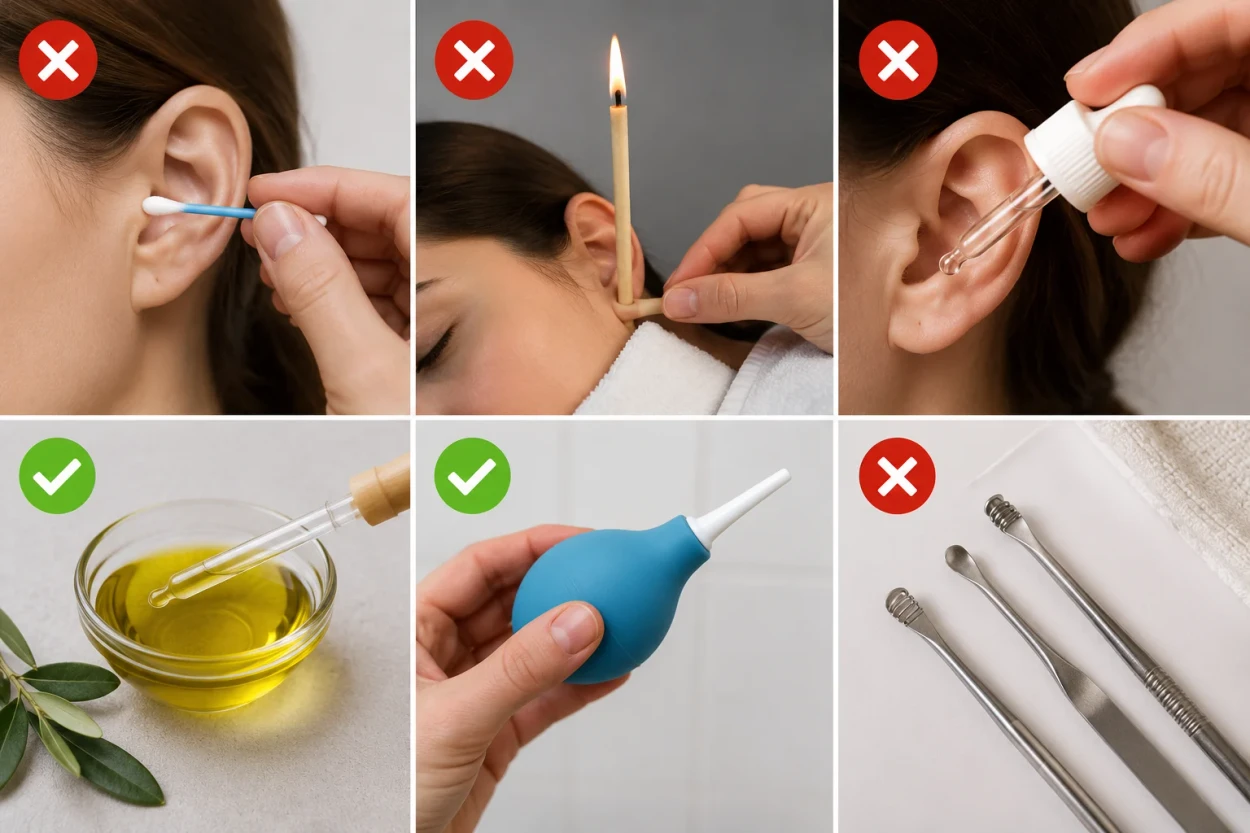
Cotton buds are one of the most common causes of ear injuries treated in emergency departments. The tip compacts wax against the eardrum rather than extracting it, and if your hand slips, the consequences can be serious.
The NHS explicitly advises against putting anything smaller than your elbow in your ear. That guidance exists for a reason.
Ear Candling
Ear candling uses a hollow cone made of wax-coated fabric. You place it in the ear and light the top. The heat is supposed to create a vacuum that pulls out the wax. Studies have found it does neither of these things.
There is no measurable negative pressure created. What ear candling reliably produces is a risk of burns to the face, ear canal, and eardrum from dripping molten wax.
Several cases of candlewick material being found lodged in patients' ears have been documented in ENT literature. This method should be avoided entirely.
Hydrogen Peroxide and Ear Drops
Over-the-counter drops with hydrogen peroxide or urea hydrogen peroxide can safely soften wax. Just use them correctly on intact ear canals. The issue is that many people use them incorrectly, too often or at the wrong concentration.
Used on a perforated eardrum, these solutions can cause a painful chemical irritation to the middle ear. If you are not certain your eardrum is intact, do not use them without speaking to a pharmacist first.
Olive Oil, Mineral Oil, and Other Home Remedies
Warm olive oil is one of the more reasonable home approaches, and the NHS does mention it as a first-line softening measure. It loosens wax gradually over several days and does not carry the injury risk of solid instruments.
The limitation is that it only softens wax. It does not remove it. If the impaction is significant, the wax needs physical extraction, not just softening.
Ear Irrigation Kits and Ear Picks
Home irrigation kits, which use a syringe or bulb to flush water into the ear canal, can dislodge wax but also carry real risks. Incorrect technique, water that is too cold or too hot, or too much pressure can cause dizziness, pain, or a perforated eardrum.
Metal ear picks, popular on social media, are particularly dangerous. The ear canal is just over 2.5 cm long. There is very little room for error, and you cannot see what you are doing.
Risks of DIY Ear Wax Removal at Home

Severe Wax Impaction
The most common outcome of amateur removal attempts is not a cleaner ear; it is a worse blockage. Cotton buds and picks push wax into a tight plug. This plug sits against the eardrum and is much harder to remove than the original build-up.
Symptoms of full impaction include a sensation of pressure, muffled hearing, and occasionally a low-frequency ringing sound.
Ruptured Eardrums (Tympanic Membrane Perforation)
The eardrum is a thin membrane roughly 8 to 10 millimetres in diameter. Poking at wax with a rigid instrument risks puncturing it, and that is not a minor injury.
A perforation can cause sudden sharp pain. It may also lead to bleeding and temporary or permanent hearing loss, depending on its size. Small perforations often heal on their own over weeks, but larger ones may require surgical repair.
Painful Ear Infections (Otitis Externa)
Otitis externa, known as swimmer's ear, is the result: a painful, swollen canal that can drain pus and reduce hearing. Mild cases often settle with acidifying drops. If your ear issue is more persistent, you may need antibiotics and steroids. A pharmacist can evaluate your condition after checking your ear. If you have diabetes or a weak immune system and feel ear pain with discharge, don't wait. You need urgent medical help. Infections in the ear canal can spread quickly in these cases.
Tinnitus and Vertigo
Pressing on or irritating the eardrum can trigger temporary tinnitus, a persistent ringing or buzzing in the ear. In most cases this resolves, but it can persist in people with underlying auditory sensitivity.
Irrigation with water that is not close to body temperature can trigger vertigo. The temperature change impacts the balance organs located just behind the ear canal. This change creates a strong false feeling of spinning. For most people this settles within minutes, but it can be alarming and it is a common reason people abandon home irrigation kits.
When You Should Avoid Removing Ear Wax at Home
Some people should not attempt home ear wax removal under any circumstances. This includes anyone with diabetes. Ear canal infections in diabetic patients can progress much faster and worse than in healthy individuals.
A weak immune system from medication, chemotherapy, or a chronic condition can lead to serious infections. Even a small scratch in the ear canal can become a big problem.
Anyone with a history of ear surgery, grommets, or a known perforated eardrum should not use drops, irrigation kits, or any instrument at home. These interventions require clinical assessment first.
Safe Alternatives to DIY Ear Wax Removal
Over-the-Counter Ear Wax Softening Drops
You can get drops with olive oil, almond oil, or sodium bicarbonate at any pharmacy without a prescription. Do not use almond oil drops if you have a nut allergy. Do not use any drops if you have or suspect a perforated eardrum, or if your ear is currently infected. Used correctly, twice a day for three to five days, they soften wax enough for it to work its way out naturally. Sodium bicarbonate works well but can dry out the ear canal, so do not extend the course beyond five days without advice.
Safe Home Care Practices
The safest home practice is to do very little. A warm flannel held to the outer ear after a shower can help. Tilting your head to let water drain naturally after bathing is enough for most people.
Resist the urge to clean inside the canal. The outer ear is the only part that benefits from manual cleaning.
Microsuction Ear Wax Removal
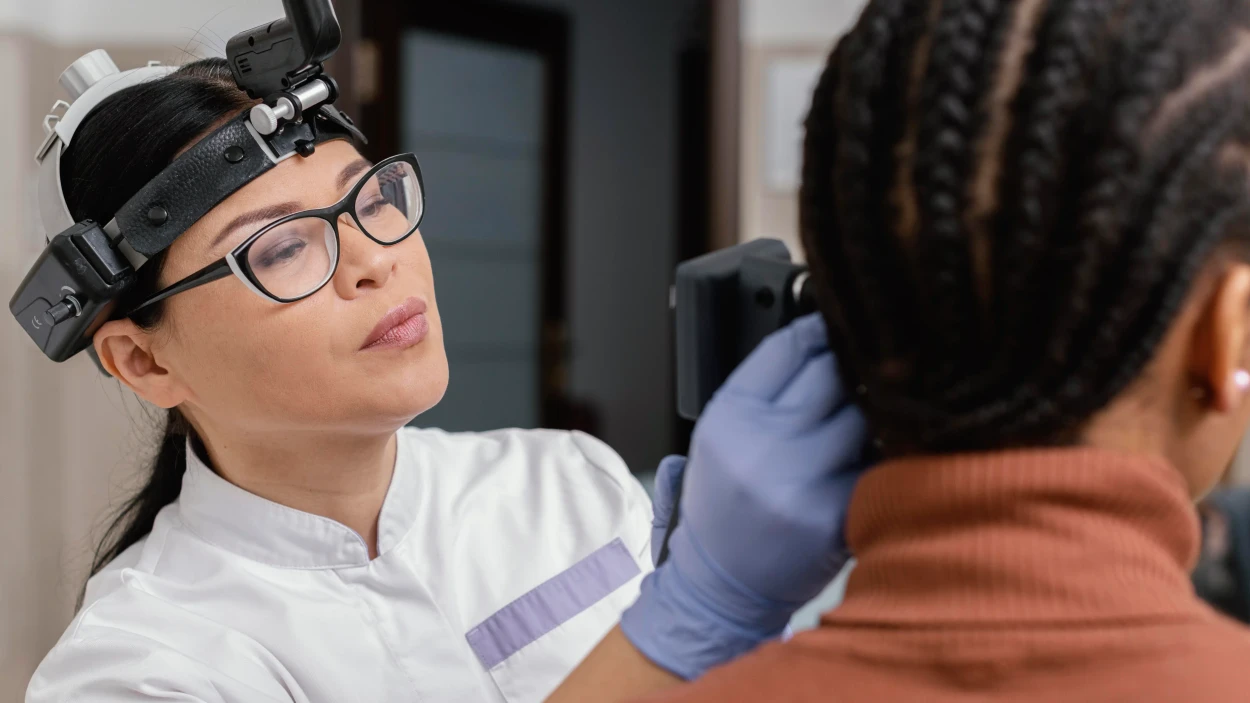
Microsuction is the method most ENT specialists and audiologists use. A trained clinician uses a low-pressure suction device. They do this under direct vision with a binocular loupe or microscope. This method removes wax without flushing water into the ear.
It is quick, usually painless, and does not involve flushing water into the ear, which makes it gentler than irrigation. If you have a perforated eardrum, grommets in place, or a history of ear surgery, microsuction is usually best. However, you need an assessment first. In some cases, an ENT service may be a better choice.a Tell the clinician about any ear surgery or perforation when you book.
Manual Removal by an ENT Specialist
For very hard or deeply impacted wax, an ENT consultant may use a fine curette or forceps under direct microscopy. This is the gold standard for difficult cases and the appropriate step if microsuction has not fully resolved the blockage.
When to See a Doctor
See a GP or visit an urgent Ear Wax Removal clinic promptly if you experience any of the following after attempting ear wax removal at home:
Hearing loss affecting one ear only, or hearing that has got noticeably worse over the past few weeks
Ringing or buzzing in one ear only, or a sound that pulses in time with your heartbeat
Weakness, drooping or numbness on one side of your face alongside hearing loss, treat this as an emergency and call 999
Ear pain with discharge, if you have diabetes or a weakened immune system and it has not improved within three days
These are not symptoms to wait on. A ruptured eardrum or infected ear canal needs clinical management, not more home treatment.
Myths and Facts About Ear Wax Removal
Myth: Dark ear wax means your ears are dirty.
Fact: Wax colour reflects how long it has been in the canal, not cleanliness. Darker wax is simply older wax.
Myth: If your ears feel blocked, you have too much wax.
Fact: Blocked ears can also be caused by a middle ear effusion, eustachian tube dysfunction, or early hearing loss. Wax is not always the culprit.
Myth: Ear candles are a traditional remedy that really works.
Fact: Clinical trials have found no evidence they remove wax. The risks (burns, wax deposits, fire) are well documented.
Myth: Soft wax means you can remove it easily at home.
Fact: Consistency does not determine safety. Soft wax can still be pushed onto the eardrum, and the canal skin can still be damaged.
Frequently Asked Questions
Conclusion
Your ears are better at looking after themselves than most people assume. Wax is protective, not a problem to be solved with a cotton bud.
When wax does build up to the point of causing symptoms, the answer is professional removal, not a home kit and a hopeful attitude. Microsuction is safe, fast, and available without a GP referral at many pharmacies.
If you are experiencing hearing loss, pressure, or discomfort, book an appointment rather than reaching for the cotton buds. It simply is not worth the risk.

Ready to book an appointment?
Same-week availability for most services. Book online or call us.